Red Light Therapy
in Broomfield, CO
Pro athletes use it. Dermatologists use it. Every longevity podcast won’t shut up about it.
Here's why: your cells run on energy produced by your mitochondria. Red light gives them more of it.
That’s the whole thing. Specific wavelengths of light, absorbed by the cells underneath your skin, supporting the process your body already uses to repair, rebuild and burn. Twenty minutes at a time.


Red Light Therapy in Broomfield, CO
Pro athletes use it. Dermatologists use it. Every longevity podcast won’t shut up about it.
Here's why: your cells run on energy produced by your mitochondria. Red light gives them more of it.
That’s the whole thing. Specific wavelengths of light, absorbed by the cells underneath your skin, supporting the process your body already uses to repair, rebuild and burn. Twenty minutes at a time.
Since 2008
Helping Colorado lose weight
Voted Best Clinic
8 years running
5.0 on Google
From real patients
What Red Light Therapy Actually Is
Red light therapy — also called photobiomodulation, low-level light therapy, or LLLT — delivers specific wavelengths of red and near-infrared light into your tissue.
It's not heat. It's not a laser. Nothing is cut, frozen, or burned.
Light at these wavelengths is absorbed by your mitochondria — the structures inside each cell that produce ATP, the energy your cells run on. The leading explanation is that this absorption helps mitochondria work more efficiently, which means more cellular energy available for whatever that tissue does: repairing, producing collagen, clearing inflammation, regenerating.
That's why the list of things red light has been studied for is so broad. It isn't targeting one condition. It's supporting the process every cell uses to do its job.
What It's Been Studied For
Red light and near-infrared therapy has been researched across a wide range of applications. Here's where the attention is:
Skin and Appearance
- Collagen and elastin production
- Fine lines and wrinkles
- Skin firmness and tone
- Cellulite appearance
- Loose skin after weight loss
- Acne and blemish-prone skin
- Scarring and skin texture
- Redness and uneven tone
Body and Shape
- Fat release from stubborn areas
- Inch loss in treated areas
- Skin tightening as volume comes down
- Lymphatic circulation
Recovery and Performance
- Muscle recovery after training
- Soreness and post-exercise fatigue
- Joint comfort and mobility
- Tissue repair and wound healing
- Circulation and blood flow
- Training capacity and endurance
Inflammation and Comfort
- Inflammatory response
- Everyday aches and stiffness
- Post-injury recovery support
Energy, Sleep and Mood
- Cellular energy production
- Sleep quality
- Daytime energy
- Mood and seasonal low light
- Stress and relaxation
The strength of the evidence varies a lot across that list — skin and tissue repair are the most studied, and other areas are earlier and more mixed. Anyone who tells you red light is proven for all of the above is selling something. What's fair to say: it's one of the most actively researched non-invasive wellness technologies there is, and the mechanism is well understood.
Red light therapy is not a treatment for any disease, and this is not medical advice. Talk to your provider about your specific situation.
What a Session Is Actually Like
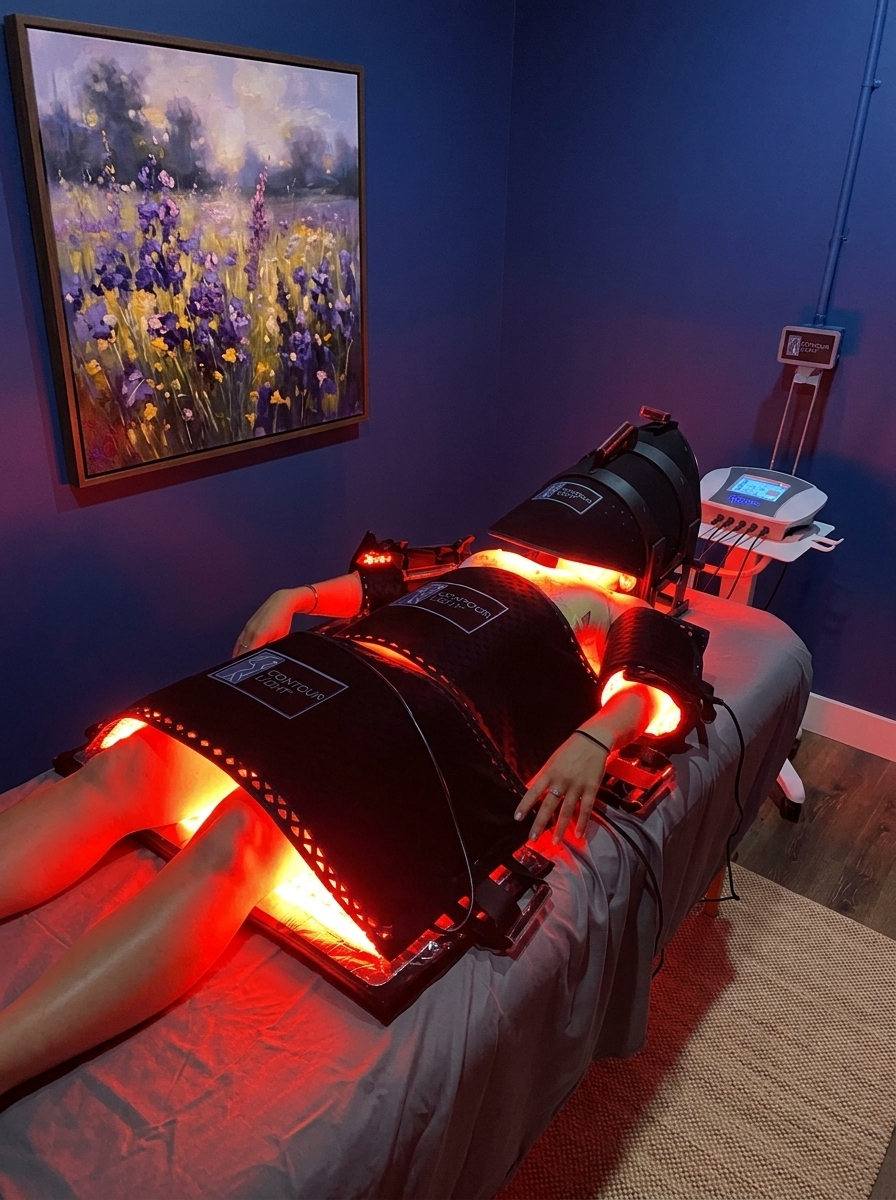
You lie down. Contact pads are positioned over your treatment areas. The lights come on. You rest for about 20 minutes.
No pain, no cold, no heat, no suction, no needles. Most patients call it the most relaxing part of their week — a fair number fall asleep. You get up, you leave, you go back to your day. There's no recovery period, no redness, nothing to plan around.
A short walk afterward helps your body process what's been released.
It Started at NASA
Red light's modern history runs through space research.
NASA began studying LEDs in the early 1990s to grow plants on shuttle missions. Researchers noticed something unexpected — the crew's skin lesions and wounds were healing faster under the lights. That observation turned into decades of research into light and tissue repair, and eventually into the clinical devices used today.
Sunlight therapy goes back much further. Niels Finsen won the 1903 Nobel Prize in Medicine for treating skin conditions with concentrated light. The idea that light does something to living tissue isn't new. What's new is being able to isolate the exact wavelengths that do it, and deliver them at the right dose.
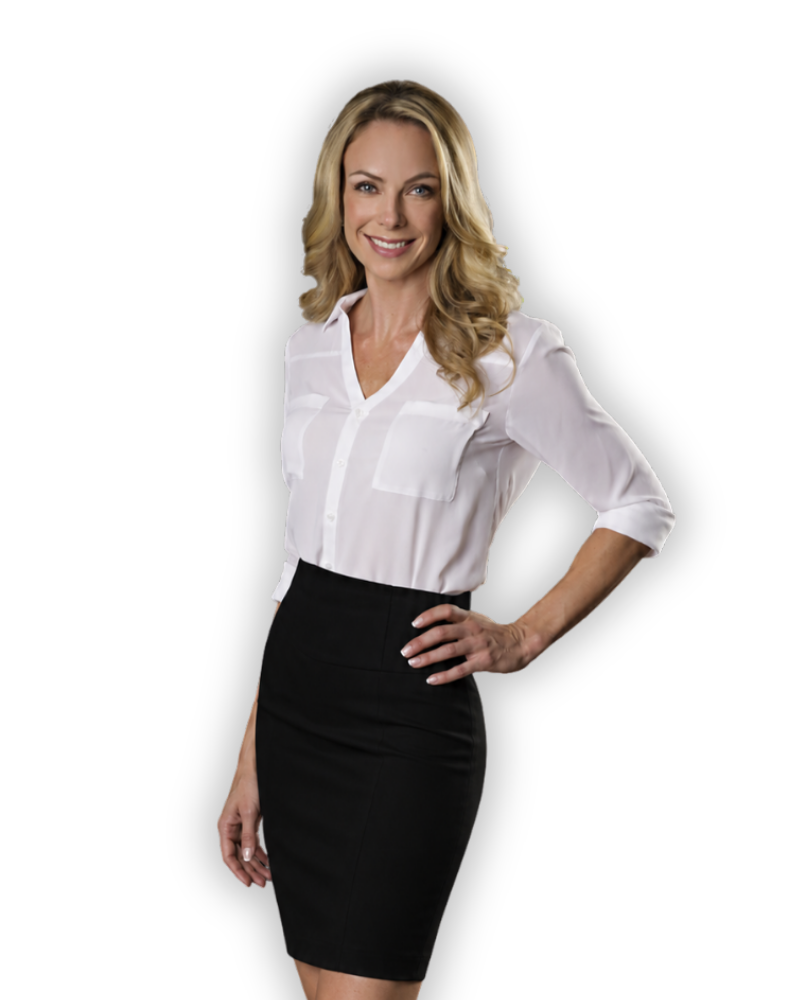
DR. MELISSA GROELZ
Dr. Groelz has specialized in science-based, guided weight loss since 2008, helping thousands of patients across the north Denver metro. Her methodology is built on correcting the systems that control fat storage — insulin, metabolism, and hormones.
She struggled with her own weight for years before finding the metabolic science that finally worked.
Frequently Asked Questions
Is red light therapy the same as a laser?
No. Lasers deliver concentrated, coherent light and usually generate heat. Red light therapy uses LEDs at specific wavelengths through contact pads, with no thermal effect.
Is it the same as a tanning bed?
Not remotely. Tanning beds emit ultraviolet light, which damages skin. Red and near-infrared light sit at the opposite end of the visible spectrum and carry no UV at all.
Does it hurt?
No. There's no heat, cold, suction or pressure. Most people find it relaxing enough to fall asleep.
How is this different from the panel I could buy online?
Power and coverage. Consumer panels and masks deliver a fraction of the energy over a fraction of the area, usually from a distance. Our pads sit directly against the skin and treat large areas in one session.
How many sessions do I need?
Most patients complete a series, with measurements at the start, after six sessions, and at the end. What's right for you depends on your goals, and it's discussed at your consultation.
Is it safe?
It's non-invasive and non-thermal, with no UV, no incisions, and no anesthesia. Your candidacy is reviewed at your consultation.
Is there downtime?
None. You go straight back to your day. Light movement afterward is encouraged.
What's the difference between red light therapy and body contouring?
They're the same sessions here. "Body contouring" describes what it does to your shape. "Red light therapy" describes how it works and covers the broader benefits.
Will it help with loose skin?
The near-infrared wavelength stimulates collagen and elastin production, which supports skin firming. It's one of the main reasons Dr. Groelz chose this technology over the alternatives.
Serving Broomfield and the North Denver Metro
Ideal Weight Loss Colorado is located at 413 Summit Blvd, Suite 101 in Broomfield, minutes from Interlocken and Flatiron Crossing. We work with patients from Broomfield, Westminster, Superior, Louisville, Lafayette, Erie, Arvada, Thornton, and north Denver.
413 Summit Blvd, Ste 101, Broomfield, CO 80021 (303) 548-3841
Monday, Wednesday, Thursday: 9:30 AM – 6:00 PM Tuesday: 9:30 AM – 2:00 PM Friday: 9:30 AM – 1:00 PM Saturday: By appointment
Want to try Red Light Therapy?
Get 70% off your first session